"The Inside-Out Winter: What I Wish I’d Known About the Algarve in February"
- Katie Durie

- Feb 5
- 4 min read

Everyone tells you about the 300 days of sunshine, but nobody mentions the "refrigerator effect" of a traditional Portuguese villa in February. Don't get me wrong—the weather outside is often glorious, a spring-like reprieve from the rest of Europe's gloom—but the real battle is happening indoors. Before you pack your bags for a late-winter escape, there are a few things I desperately wish I’d known about the architectural reality of life in the south of Portugal.

The Great Indoors (and Why It’s Colder Than the Beach)
The most jarring discovery was the construction of the homes themselves. Most houses here are built of solid cement and stone designed to keep the scorching heat out during July, which means they are world-class at retaining the damp chill in February. Walking across the tile floors feels like stepping onto an ice rink; I remember reading advice to pack merino wool socks and thinking it sounded dramatic—I get it now. While my "Algarve wardrobe" featured plenty of light layers and breezy cardigans for the sun-drenched terrace, I spent most of my time indoors huddled in a heavy, chunky sweater that I bought shortly after arriving!
Even if you’re savvy enough to check for heating before you book, the reality can be deceptive. Our rental technically has "indoor heating," but it’s limited to individual units in the bedrooms and living area. This leaves the rest of the house, like the kitchen and hallways, feeling like a subterranean cave. You’ll find yourself sprinting from the heated "islands" of the house to the kitchen to make coffee, bundled up like you’re trekking the tundra, only to step outside ten minutes later and realize it’s actually a beautiful 17°C day.

The "Layering Paradox" and Uncertain Skies
This leads to what I call the Algarve Layering Paradox. In a normal winter climate, you bundle up to go out and peel layers off when you come home. Here, the ritual is reversed. I found myself stripping down to a T-shirt to sit in the garden for lunch, only to have to "suit up" in a fleece and heavy wool socks just to wash the dishes. In fact, by my second day, the "light sweaters" I'd packed felt like a cruel joke. I ended up making an emergency run to the local Primark, where I bypassed the cute spring dresses and headed straight for the thickest wool sweaters, fleece-lined joggers, and the sturdiest slippers I could find. If you see someone walking around a sunny Portugese villa looking like they're dressed for an Alaskan cabin, don't judge - they've just spent ten minutes standing on a cement kitchen floor.

The Silver Lining: A Landscape in Bloom
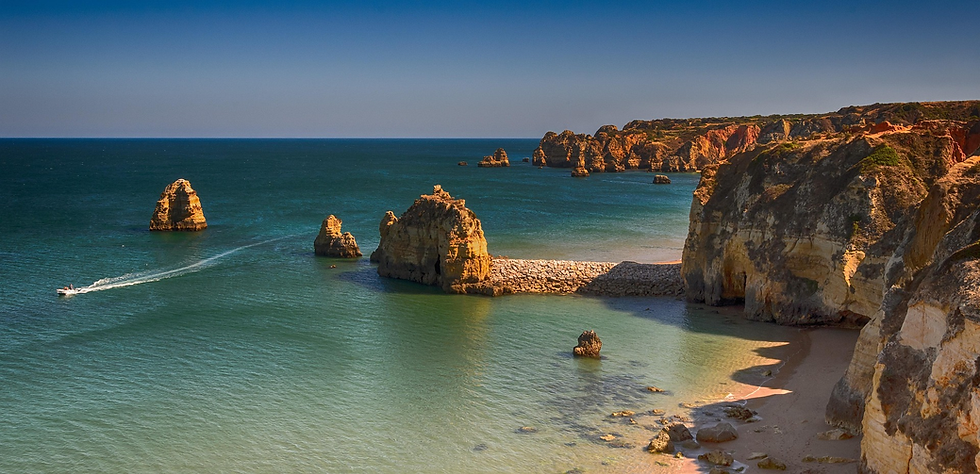
If there is one thing that makes the damp socks worth it, it’s what the rain does to the landscape. While the Algarve of August is a study in scorched earth, a wet February is impossibly, vibrantly green. The hills look like they’ve been pulled straight out of Ireland, and the contrast against the deep turquoise of the Atlantic is breathtaking.
But the real showstopper is the almond blossom. Local legend says a Moorish king planted thousands of almond trees so his Nordic queen wouldn't miss the snow, and in February, that legend comes to life. The countryside is blanketed in delicate white and pale pink petals. Walking through these orchards, the air smells fresh and earthy, and you realize you're seeing a version of Portugal that most summer tourists can’t even imagine.
The Ultimate "Inside-Out" Packing List for Algarve in February
To survive the February Algarve, your suitcase needs to prepare for two different planets:
For the "Indoor Tundra":
Merino Wool Socks: Cotton is the enemy. Merino stays warm even in the damp.
Rubber-Soled Slippers: A must. You need a thermal barrier between your feet and the stone tile.
The "House Sweater": One heavy, chunky fleece or wool layer specifically for sitting in your living room.
Thermal Base Layers: Heat-tech tops are the easiest way to stay warm in a drafty kitchen without bulk.
For the "Uncertain Outdoors":
A Sturdy Rain Shell: With this year's extra rain, you need a proper waterproof jacket with a hood.
Waterproof Walking Shoes: Leave the canvas sneakers at home; the countryside is currently a beautiful, muddy mess.
Sun Layers: T-shirts are still essential for when that 17°C sun finally hits.

Emergency Warmth: The Local Survival Kit
If you arrive and realize your gear isn't enough, head to a local supermercado or loja chinesa:
The Botija de Água Quente: A hot water bottle is the unsung hero for warming up a bed that feels like a slab of granite.
The Termoventilador: A cheap portable fan heater can blast the chill out of a small kitchen in minutes.
Aguardente de Medronho: If all else fails, try a small glass of this local "firewater." It provides an immediate, glowing warmth from the inside out.
To make sure you're prepared for both the brilliant sunshine and the stone-cold kitchens, I’ve put together a comprehensive [Algarve in February Packing List] that covers all the 'inside-out' essentials.

Comments