Quiet Villages in Andalusia for Slow Travel
- Katie Durie

- Jan 28
- 4 min read

If you’ve already explored some of Andalusia’s more familiar villages, you may find yourself looking for places that feel quieter and less shaped by tourism. Alongside the region’s well-known favourites are many smaller villages where daily life continues with little concern for visitors.
This article focuses on lesser-known villages in Andalusia that reward slowing down rather than sightseeing. They’re compact, lived-in, and best enjoyed without a full itinerary—ideal for travelers who prefer walking, lingering, and unstructured time. These are perfect destinations for slow travelers.
1. Canillas de Aceituno, Málaga Province

Canillas de Aceituno sits at the edge of the Sierras of eastern Málaga province, surrounded by rugged hills and olive groves. It feels practical and grounded, with everyday life taking priority over tourism. Streets are narrow and slightly uneven, and locals tend to outnumber visitors, especially outside summer.
What makes Canillas de Aceituno especially appealing for slow travel is that it feels useful rather than curated. Small grocery shops, bakeries, and bars are scattered naturally through the village, and nothing is far away. Even on quiet days, there’s a sense of routine rather than stillness.
Highlights
Walk through the village streets and small plazas
Visit the parish church and surrounding lanes
Start or finish a walk toward El Saltillo footbridge
How long you need
Half a day, or longer if you plan to hike. It’s an easy place to linger over lunch after a walk.
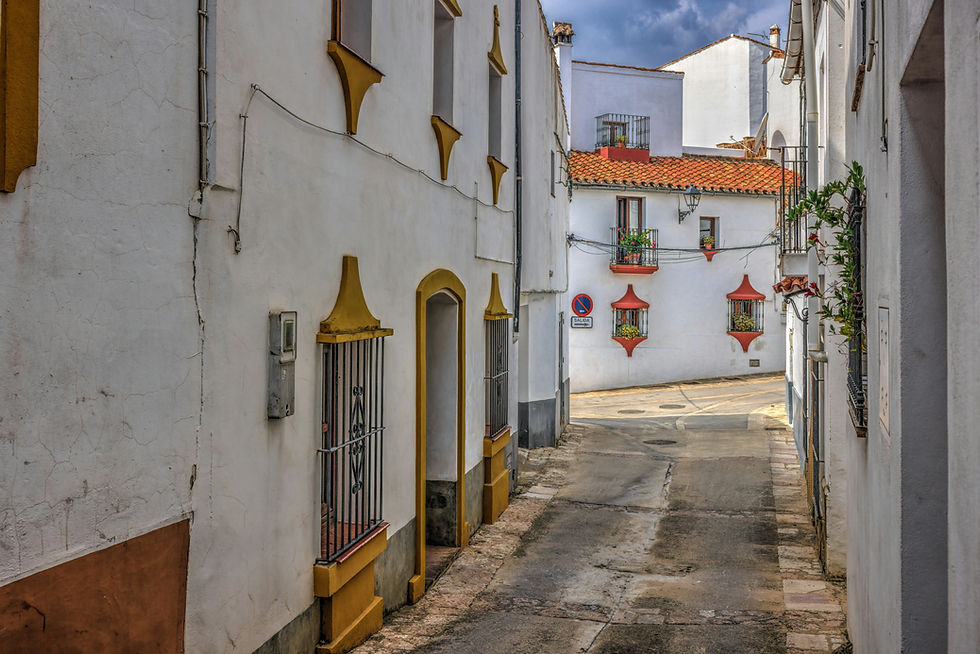
2. Gaucín, Málaga Province
Gaucín is a hilltop village near the Cádiz border, set above wide valleys and rolling countryside. It has long attracted artists and writers but remains understated and slightly rough around the edges. Streets wind loosely rather than following a set route, opening unexpectedly onto viewpoints.
Gaucín’s appeal lies more in atmosphere than landmarks. The village encourages wandering rather than ticking things off, and its views shift throughout the day. It’s the kind of place that feels more rewarding if you slow down or stay overnight.
Highlights
Walk up to the Eagle Castle ruins for panoramic views
Wander the quieter back streets of the old town
Stop at a café overlooking the valley
How long you need
2–3 hours for a visit, or overnight if you want a slower rhythm and evening views.
3. El Gastor, Cádiz Province

El Gastor sits above the Zahara–El Gastor reservoir but receives far fewer visitors than nearby Zahara de la Sierra. The village feels functional and local, with modest houses, everyday shops, and a steady pace of life.
It’s often overlooked because of its more famous neighbour, but that works in its favour. El Gastor is compact, easy to walk, and relaxed even during busier seasons. It suits travelers who enjoy places that feel ordinary rather than staged.
Highlights
Walk the village perimeter for reservoir views
Explore the central square and surrounding streets
Visit the small local museum if it’s open
How long you need
2 hours, or half a day if combined with walking or a long lunch.

4. Zuheros, Córdoba Province
Zuheros is a small village in the Subbética Natural Park, surrounded by olive groves and limestone hills. A castle sits above the village, while the streets below remain quiet and residential.
The village feels removed from main travel routes, which keeps it calm even in peak seasons. Everything is close together, making it easy to explore on foot without effort. It works well as a gentle contrast to Andalusia’s larger towns and cities.
Highlights
Walk up to the castle for views over the olive groves
Explore the compact historic center
Visit the nearby Bat Cave (Cueva de los Murciélagos) if interested
How long you need
2–3 hours for the village itself, longer if you include the cave visit.
5. Trevélez, Granada Province

Trevélez is one of the highest villages in Spain, located in the Alpujarras on the southern slopes of the Sierra Nevada. The village is spread across three sections, connected by sloping streets and footpaths.
Because of its layout, visiting Trevélez naturally slows you down. Daily life revolves around walking, weather, and mealtimes rather than attractions. It’s cooler than much of Andalusia and particularly appealing to travelers who enjoy mountain landscapes.
Highlights
Walk through the three sections of the village
Enjoy views across the Alpujarras mountains
Stop at a local bar for a simple meal
How long you need
Half a day is ideal, especially if you enjoy walking and lingering over lunch.
Good to Know Before Visiting Quiet Villages inAndalusia
Getting around: A car is usually necessary. Public transport is limited or infrequent.
Facilities: Expect fewer restaurants and shops, many closing mid-afternoon.
Language: English is less widely spoken than in tourist centres.
Pace: These villages suit travelers comfortable with quiet and unstructured time.
Winter travel: Many are well suited to winter, with fewer visitors and mild daytime conditions.

Looking for More Andalusian Villages?
If you’re also interested in villages that are a bit more well-known but still easy to explore at a relaxed pace, you may enjoy my article on the cutest villages in Andalusia. It focuses on places that are more familiar to visitors but remain compact, walkable, and well-suited to short, unhurried stops. Together, the two articles offer a balanced mix of popular favourites and quieter alternatives.
Final Thoughts
Lesser-known, quiet villages in Andalusia aren’t about checking off sights. They’re about walking without a plan, sitting longer than intended, and letting the day unfold slowly. If you enjoy places that feel lived-in rather than curated, these villages are well worth your time.


Comments