Winter Travel in Nerja, Spain: History, Highlights, and Top Things to Do
- Katie Durie

- Nov 21, 2025
- 4 min read
Updated: Jan 20

Nestled on the eastern edge of the Costa del Sol, Nerja feels worlds away from the high-rise resorts that define much of southern Spain’s coastline. With its whitewashed old town, dramatic cliffs, and clear Mediterranean waters, Nerja manages to be both lively and deeply traditional. It’s a place where history, nature, and everyday Andalusian life blend seamlessly.
A Brief History of Nerja

Nerja’s story stretches back thousands of years. The area was first inhabited in prehistoric times, a fact dramatically confirmed by the discovery of the Nerja Caves (Cuevas de Nerja) in 1959. These vast caverns contain stalactites, stalagmites, and evidence of human presence dating back over 40,000 years.
During the Roman period, Nerja was part of an important coastal network of settlements, benefiting from fishing and trade. Later, under Moorish rule, the town was known as Narixa, meaning “abundant spring,” a reference to the fresh water sources that supported agriculture in the region.
After the Christian reconquest in the late 15th century, Nerja was gradually repopulated and rebuilt. Fishing, agriculture, and sugar production shaped local life for centuries. Tourism arrived much later, allowing Nerja to retain a strong sense of identity and a slower pace than many neighboring coastal towns.
Winter Travel in Nerja - Top Things to Do
1. Balcony of Europe (Balcón de Europa)

Nerja’s most iconic landmark, the Balcony of Europe, is a wide promenade perched dramatically above the sea. Originally the site of a 9th-century fortress, it now offers sweeping views of the Mediterranean, rocky coves, and the distant mountains. Street musicians, cafés, and ice cream shops make it a natural gathering place at any time of day.
2. Nerja Caves (Cuevas de Nerja)
Just outside town, the Nerja Caves are one of Spain’s most impressive natural attractions. Visitors can explore enormous chambers, some used for concerts and performances, while learning about prehistoric art and early human life. The scale and atmosphere of the caves are unforgettable.
3. Burriana Beach
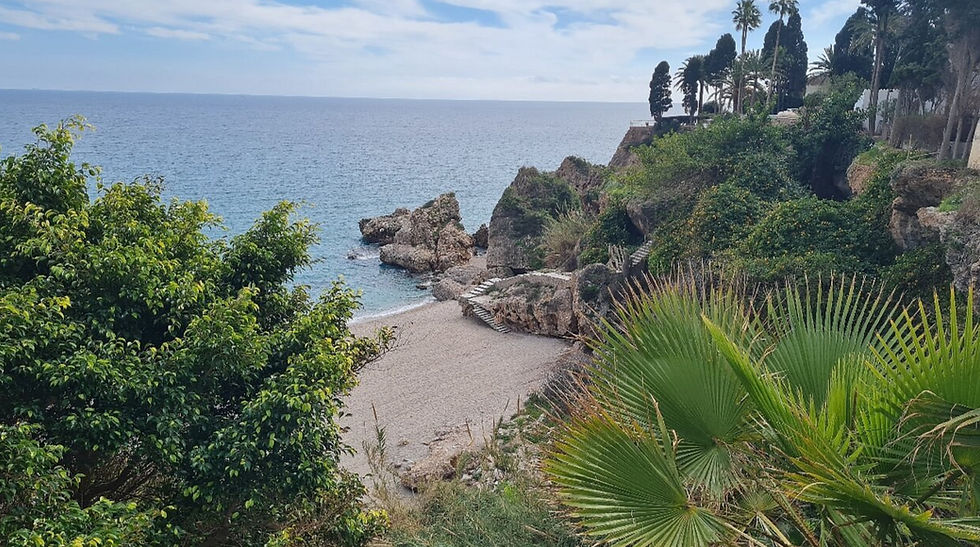
Burriana Beach is Nerja’s most popular and accessible beach, known for its golden sand and calm waters. It’s also famous for its beachfront restaurants serving traditional dishes like paella and espetos (grilled sardines). Whether you’re swimming, kayaking, or simply relaxing, Burriana offers a perfect balance of activity and comfort.
4. Old Town and Plaza de las Maravillas
Wandering through Nerja’s old town is an experience in itself. Narrow streets, whitewashed houses, colorful flowers, and small local shops create a village-like feel. The Plaza de las Maravillas, near the town hall, is a lively hub where locals gather for coffee, tapas, and evening strolls.
5. Hiking in the Natural Parks

Nerja sits at the edge of spectacular natural landscapes. Nearby Sierras of Tejeda, Almijara, and Alhama Natural Park offers hiking trails with panoramic views, rugged terrain, and surprising quiet. Popular routes include riverside walks and mountain trails that reveal a completely different side of Andalusia beyond the coast.
Where to Eat in Nerja (Open in February)
One of Nerja’s advantages as a year‑round town is that many restaurants stay open even in winter. February is a great time to enjoy relaxed meals without summer crowds, especially in the old town.

1. La Bottega Food & Wine: A long‑time favourite for Mediterranean cuisine with a creative touch. Known for quality ingredients, excellent wine selection, and a cozy, welcoming atmosphere.
2. Oculto Restaurante: A stylish spot offering modern Andalusian and Mediterranean dishes. Ideal for an evening out, with inventive plates and a lively but intimate setting.
3. Restaurante Oliva: Located near Plaza de España, Oliva serves reliable Mediterranean food in a central, easygoing setting—perfect after a day of exploring the old town.
4. El Pulguilla: Casual, authentic, and popular with locals. This lively tapas bar is known for fried fish, grilled seafood, and classic Andalusian flavors.
5. Il Covo: A well‑regarded Italian restaurant offering handmade pasta and traditional dishes. A good choice if you’re staying longer and want variety beyond Spanish cuisine.
Why Nerja Stands Out

What makes Nerja special is its balance. It offers history without feeling like a museum, beaches without overwhelming crowds, and modern comforts without losing its Andalusian soul. Whether you’re visiting for a few days or settling in for a longer stay, Nerja invites you to slow down, look around, and truly experience southern Spain. There are so many things to do in Nerja, Spain. From prehistoric caves to cliffside viewpoints and everyday life in the plazas, Nerja is a town that stays with you long after you leave. Winter travel in Nerja is not to be missed.

Comments